 |
| (http://www.urbanchurchwellness.org/wp-content/uploads/2012/10/Health-Education-Banner.jpg) |
As I left class last week, I
wondered what significance the old story and the new story have on 21st
century learners. I thought maybe BIG ideas, creative insights, and new
discoveries. As I start this blog, I want to say that as educators and teachers
bring learning to children and youth in schools, it is important that they take
it to new and interesting heights! First off, the old story can go beyond what
is already known to better the new story. So what is the old story you may ask?
The two approaches to education are traditional and constructive (I like constructive
more). John Locke’s traditional approach seeks to the concept of tabula rasa. For example, a student is born empty, like a blank slate but will not be later on as the teacher transmits the
knowledge to him or her (Androne, 2014).
On the other
hand, I can describe the constructive approach as knowledge construction not knowledge
reproduction (Larmer & Mergendoller, 2010). As I pursue my educational endeavours within the artistic
field, I would allow the students to freely express and make intelligent
choices that help them learn to their best potentials when it comes to
visualizing their personal artistry. The progressive-center
paradigm shows that a teacher needs to begin with the preferences and the
interests of the students first (Darder, Baitodano, & Torres, 2009). I
believe that students are organic beings who are in the process of growing and
changing within their development. It is vital that a teacher must plan out and
recognize the developmental stages that each of the students are at because
they are the facilitators of their learning. I think this process of a
continuance dialogue between the student and teacher forms a communicative
relation that is democratic as the educationalist John Dewey would definitely
agree on. It is also important to take in mind that education engages with the
notion of 'experience'.
The Journey of the New Story…
Flipped Classroom
So enough
about the old story, let’s build on the new story. The flipped classroom is one
ideal that is becoming more and more popular in classrooms today. I am actually
doing this in my education course 4P19. It is not the traditional method that
has the teacher lecture for hours and hours while the students sit in separate
seats and listen. Rather, the students read and gain the course material before
hand and when it comes time for class, the teacher actively clarifies that
knowledge through activities, projects, or discussions. In this way, the students
have the opportunity to voice their own thoughts and insights while developing
deep thinking and reflection. Take for example, the success criteria assignment
that I had to create with limited instruction as to how to go about it. Yet, I
managed to create one that embodies the structure and meaning of what a success
criteria is by using the exemplar in the textbook Interweaving Curriculum and Classroom Assessment: Engaging the 21st-Century
Learner.
 |
| (http://farm9.staticflickr.com/8527/8615353879_58a09c6cce_b.jpg) |
PBL, Project Based-Learning
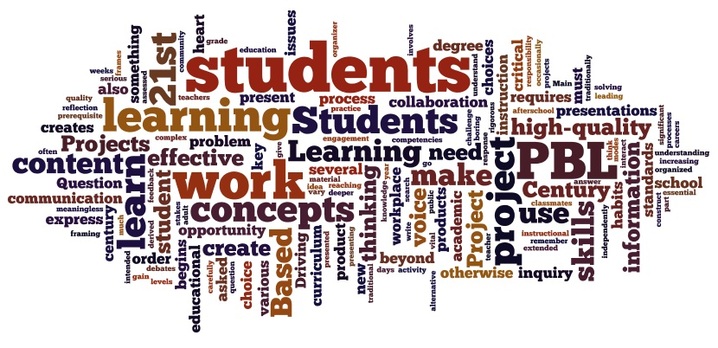
So you might be thinking, is that all to the new story? No, let’s look at another learning method, PBL, project-based learning. This is one comprehensive approach that reflects content mastery and critical thinking. Students learn by ‘doing a project’ or ‘an experimentation’ and this demonstrates:
· Student voice and Choice: Project work allows the students to make their own choices that interests them, thus they become active learners and decision makers in reflecting on the layout, execution and intent of the project.
· Feedback and Revision: With importance of feedback and revision, students are able to critique their other peers and suggest improvements on specific areas where the project can grow even more successful.
· Problem-Solving: Students learn to process solutions for difficult problems.
· 21st century skills: Students learn to work in a team while gaining communication among their classmates.
· Inquiry and Innovation: Students make real
inquiry that is not about researching for information and noting it down,
rather inquiry enhances the students to question problems and to look for
resources that lead to the discovery of their answers. They learn to draw on
their own ideas and conclusions.
· Driving Question: This is a question that captures the interest of the students and allows them to apply the content through critical thinking and reflection.
 |
| (http://tgccapstone.weebly.com/uploads/9/6/5/6/9656824/1076132.jpg?719) |
Check out this interesting video on the concept of PBL:
(https://youtu.be/LMCZvGesRz8)
PBL makes school engaging for students and it is student-centred. In my understanding, PBL is not just a ‘regular project’, not a project given to reward students for their learning but it is the learning and the process that are the reward (Larmer & Mergendoller, 2010). In a way, the method allows for the growth of a ‘new mindset’ instead of a ‘fixed mindset’ to foster while experiencing real-world prevalence to learning (Drake, Reid, & Kolohon, 2014).
So to end this very first blog, I leave you with this quote: “Education is the most powerful weapon we can use to change the world”~ Nelson
Mandela
So good luck in discovering your teaching journey…
 |
| (http://smrt.ccel.ca/files/2012/12/537638_410452115691165_583339006_n.jpeg) |
References
Androne, M. (2014). Notes on john locke's views on education. Procedia - Social And
Behavioral Sciences, 137, 74-79. doi:10.1016/j.sbspro.2014.05.255.
Darder, A., Baitodano, M. P., & Torres, R. D. (Eds.). (2009). The critical pedagogy reader
(2nd ed.). New York, NY: Routledge.
Drake, S. M., Reid, J. L., & Kolohon, W. (2014). Interweaving curriculum and classroom
assessment: Engaging the 21st-century learner. Canada: Oxford University Press.
Larmer, J. & Mergendoller, J. R. (2010). Seven essentials for project-based learning.
Retrieved from http://www.ascd.org/publications/educational_leadership/sept10/vol68/
num01/Seven_Essentials_for_Project-Based_Learning.aspx.

Alyssa, good first bog. The first thing that I noticed was how well organized it was. Your use of headings and sub headings helped me to know precisely what you were talking about. I also thought this was a great technique, because instead of having to go back through your blog to figure out when you were talking about project based learning for example, I could just look for the heading. From your blog I was able to gain a better understanding of a flipped classroom concept. When it was explained in lecture, I did not understand the concept. By reading your explanation, I began to understand the basic concept and its practical role in a classroom setting.
ReplyDeleteIn your blog you discussed many concepts and ideas. Although you explained each idea well, in a future blog post you may want to stick to only one or two main ideas. Doing this, you would be able to get more in depth and explain your ideas more thoroughly. One more thing that I might suggest you do in your next post is to include more of a conclusion. You talked about many things in your blog and I think it would have been helpful to wrap up your thoughts in a couple of sentences.
To finish with a question, you mentioned your teachable was visual arts, which technique (flipped classroom, or project based learning) would work best in an art class?
Hi Alyssa, great insights into the flipped classroom and project-based learning. I would firstly like to extend my appreciation for how well thought out and organized your first piece was. You showed that you clearly understood all of the topics you covered and you were able to touch upon many topics in a brief blog. I enjoyed how your main topics all have the potential to be used by a teacher implementing a growth mindset. As a teacher, I think it is important to structure your classroom in a manner in which a growth mindset can be executed and you displayed your knowledge of this throughout your piece. I also enjoyed how you separated your ideas with headings. This is definitely something I will look to incorporate into my next piece as it allows the reader to follow along and come back to information very efficiently. It also puts a break in the text that makes it pleasing for the eyes, which is an undervalued approach to blogging if you ask me, so once again great work. If I could offer some advice it would be that you covered quite a few topics over the course of your blog. This was great as it gave the reader a broad overview of many of the options there are for teachers to create constructive, inclusive and growth minded environments. My advice would be to cover one of those topics and to cover it in detail to give the reader a firm sense of that topic. With that said, you provided an ample amount of links to research and images to support your discussion. I look forward to reading your next piece and I will leave you with this question: If, according Nelson Mandela, education is the most powerful weapon we can use to change the world, how do you plan on using it to do so?
ReplyDeleteHey Alyssa! Great first blog. I really enjoyed reading your thoughts. You made it very easy to follow and understand. I also appreciated how you incorporated what we've been focusing on in class. I specifically enjoyed your first paragraph because you're topic was well introduced so the reader knows clearly what to expect in the following paragraphs. You also chose effective visuals, which related to the text. This allowed your blog to be visually appealing and provided further understanding to the text.
ReplyDeleteAfter reading your blog, I am now able to better understand the concept of a flipped classroom and project-based learning. I believe it is important for students to be provided with the opportunities that PBL provides. I also believe that it is important for students to have a sense of ownership for their learning, like a flipped classroom demonstrates.
For your future blogs I would just say maybe to add some more personal experience rather then making it more of an academic essay. You did discuss many ideas with lots of information. A way you can do this is to maybe just have one topic that you take a lot of interest in and have one or two main subtopics.
With all being said, I do have a question for you. If you choose to use the flipped classroom approach, how do you assume to meet the needs of all your students learning styles?