Wednesday, November 4, 2015

Knowing Your Students: Visual Learning


If a child can't learn the way we teach, maybe we should teach the way they learn ~ Ignacio Estrada
(https://msdillard.files.wordpress.com/2013/01/see-eye-to-eye.jpg)

              As future professionals of the educational sphere, teachers perceive that students will respect their role as the ‘teacher’, while accommodating a curriculum that is required in the classroom. It is important to note that building and fostering positive relationships with your students brings about the best in discovering students as learners and unique individuals who seek the guidance of the educator. Specifically, teachers learn to understand the strengths, weaknesses, and interests that each student ultimately embodies and that in doing so, educators will have a sense of what areas need improvement and what areas of learning they strive the most in.  In my own perspective, teachers should definitely learn to build relationships with the students that are nurturing, in that way, students will know that someone is there to guide them. By taking the time to care about each student in the classroom, it decreases the negative impacts of them falling behind in their studies, or losing focus in what they are learning. The better we know the students and the more they know that we know them, the more invested they become in school and take the initiative.

We all know that teachers are quite busy individuals, dealing with not just one student in the class at the time but every student and trying to get through their lesson plans for the day, but they are still able to manage their time and effort to try to give every student the tools and every opportunity possible to master a subject.

Is it true to say that education seeks to foster this notion? Can teachers accommodate for every student’s profiles?

We can say that education is not embedded and built on one specific quality of learning, that there are many kinds of intelligences that each student embodies to meet their learning needs and styles. By getting to know your students on an individual level, it is a simple way that your students can feel validated and cared for, while taking more ownership in their learning.

 Learning about multiple intelligences is one way to get to know your students, coined by Howard Gardner (1983) who challenged the traditional understanding that intelligence is fixed and can only be measured through the student’s logical and linguistic abilities (Drake, Reid, & Kolohon, 2014). Overall, the mainstream definition of intelligence describes it as ‘‘A mental capacity that involves the ability to reason, plan, solve problems, think abstractly, comprehend complex ideas, learn quickly and learn from experience” (Blazhenkova & Kozhevnikov, 2014). For example, looking at visual intelligence is having an eye for detail, being able to visualize, and remember and recall images.  One way to describe this is when the teacher physically shows the students objects, considered a powerful method to teach, and can bring the interest of the subject alive. For example, showing a sphere using a ball or cylinder of a tube are more effective than telling the students what they look like or holding rocks in their hands expands their knowledge of how much can be studied about different types of rocks and the process of their formations.

Are you a visual learner?:  

(https://youtube/PJiMjSscgk4)

In my own experience, I can say that I often use visual learning , I like to have a visual representation of the information provided to me whether through a picture, a brainstorming web, a chart or a PowerPoint presentation, visual tools help me to comprehend the content better and I like to use different colours for text when writing notes. As a passionate individual for the fine arts, I can gain the ability to visualize the world accurately and to recreate my own understandings of visual experiences.

(http://www.whatismylearningstyle.com/images/visual-learner.jpg)
For example, we look at how teachers in Japan incorporate the Strategy Tree for English language learners that illustrates the Tree with its trunk, leaves, roots, water, and the sun. Linguistic knowledge and skills are represented through the leaves and the tree, while the roots, water, and the sun represent learning strategies that foster the growth of the trunk and leaves (Abe, Yoshimuta, & Hu, 2014). For many learners, the ultimate goal of second language learning is to develop the four language skills represented in the leaves that are based on linguistic knowledge, the trunk, and the other illustrations are the affective, cognitive, and sociocultural-interactive learning strategies (Abe et al., 2014). Interesting enough to see is that the size of the Tree represents the current level of the learner, and its shape varies depending on where the learner lies within their skills.

(http://sisaljournal.files.wordpress.com/2014/09/abe1.jpg)
In my future teaching, taking into consideration the dynamics of visual learning helps me to see how ideas are connected and how information can be grouped and organized in a creative way. With visual learning in mind, tools such as this tree diagram enable new concepts to be more thorough and easy to understand when they are linked to prior knowledge. I can argue that visual learning is not meant for every student and there are certainly other intelligences such as logical, intrapersonal, musical, bodily and naturalist that can be linked to each student’s way of learning. “If you are a visual learner then the whiteboard or chalkboard is your best tool and friend, you are artistic and love to draw and doodle on paper using different colours. You see things in a different light and perspective, and this style works for you!

In ending this blog, I like to say that as future teachers, we need to identify how our students learn, as we are the facilitators of their learning. We want our students to succeed and in doing so we need to create strong connections with them, and develop a learning environment where their needs and learning styles are recognized. I can say that students don’t just learn by hearing but they also learn by seeing, 


 So good luck in discovering your teaching journey…


References

Blazhenkova, O., & Kozhevnikov, M. (2009). The new object-spatial-verbal cognitive style model: Theory and 

             measurement. Applied Cognitive Psychology, 23, 638-663. doi: 10.1002/acp.1473

Drake, S. M., Reid, J. L., & Kolohon, W. (2014). Interweaving curriculum and classroom assessment: Engaging the 21st-

             century learner. Canada: Oxford University Press. 

Mayumi, A., Satomi, Y., & Davies, H. (2014). "Now maybe I feel like trying": Engaging learners using a visual tool. Studies 

             In Self-Access Learning Journal, 5, 277-293.


Wednesday, October 7, 2015

The Creative Mind, Integrating the Arts


When we think of the arts, we envision the geniuses like Leonardo da Vinci, Andy Warhol, Raphael, and so forth. But what we don’t see is the big picture here that we can all be ‘artists’ if we just use our creative minds. Art can be anything whether a simply 
line or shape, a banal or found object, abstract expressionism, or photography that can be analyzed through cultural and social understandings. Art is a wide array of interpretations that go through a creative process in the making and developing of one’s insights. I personally believe this is true as I have witnessed various kinds of art that are minimal and others overwhelming.

Yet, we know that passing a test or an exam is so important and quite the norm but students should not only be educated on learning and memorizing facts, numbers, and figures. Within the twenty-first century, creativity is a key skill in which it is interweaved throughout the curriculum, instruction and assessment; teachers use the creative process to plan the curriculum and assess student achievement (Drake, Reid, & Kolohon, 2014).

https://bornstoryteller.files.wordpress.com/2011/09/define-art.jpg
As future educators, creativity is important as it strives to help students to discover their ideas in a much broader understanding, while integrating it in the classroom to help build and grow students’ creative abilities. But it is not to suggest that the arts is only made for the art classroom, but it can emerge to other concepts and disciplines, making it more meaningful and innovative, and opening up students to ‘new ways of seeing’. If teachers glance at this new idea, we can build on something more great and enduring. For example, a teacher can look at how the arts can cross paths within the mathematical discipline. Take for instance of a learning experience within the classroom that involves studying the human figure. The math part comes in when it can help to accurately depict the human body and portrait drawing using sight measurements (La Haye & Naested, 2014). In this case, a student can build a concrete and clear understanding of the two subjects, interconnecting them to one another.  In my past experience of taking general art courses, I actually learned how to incorporate math into my artworks. When I wanted to enlarge an image onto my drawing support, I would have difficulty in drawing it so precisely and proportionately. So I did it with some mathematical help, grids. Artists have used this technique to redraw accurate drawings, and to distort and enlarge them (La Haye & Naested, 2014). The grid is an easy method; I can draw the grid over the reference photo, and then draw the exact grid again on the paper. By focusing on one square, and taking the time to accurately draw the lines and contours, the image would be finished in no time!


http://www.billybear4kids.com/Rozi/4Shawn/4GridArt.gif
Not only do we examine the mathematical approach, but we can also look into the idea of fostering literacy through the use of photography. Photographs are a way in depicting memories and stories to be remembered and told. Students can analyze text by engaging in photographs, provoking and questioning the intent and purpose. The students can voice and describe their observations, ideas, and interpretations, as well as listen to the ideas of their peers, demonstrating the act of cooperative learning and collaboration. For example, an educator can take a photograph which would be unfamiliar to the students and the teacher can ask questions such as: What do you think the intention of the photographer was? What is the power relation of the gaze between the spectators and the subject? How does the photograph relate to you? Are there any stories that can be told just by looking at it? These questions help to probe students’ thinking in a critical manner. 

But, it is also suggested that students not only learn how to “read” literally but they can also build on their writing strategies. We can examine how a teacher can teach composition writing to English-language learner students by utilizing photographs; a photograph is like a story, where the student can write a composition about the piece, and it is the photograph that serves as the subject matter or topic of the writing exercise (Chukueggu, 2011). In this way, the exercise becomes interesting as the students work with an inspiration, a reference at their fingertips, making inferences about the photograph and thinking about what it tells them.


Seven Oaks Elementary School integrates arts into classroom lessons as much as possible to get students educated about its value and importance: 


                                          https://www.youtube.com/watch?v=EzTgW0JhQ74

Check out these different interpretations and analyses of integrating creativity
In concluding this blog, creativity is important in fostering students' well-beings. Teachers need to see the BIG idea that creativity is not only designated for the art room, but anywhere within the classroom and in the curriculum. They just need to make sure that they remind students of the value of creativity, and to give every possible chance and opportunity to demonstrate it. I believe that this is truthful in its essence because as a pursuing arts teacher, I would want my students to be exposed to this type of learning experience. Igniting the creative mind for the students is essential as we do not want darkness to overtake it. 

Albert Einstein once stated: Creativity is Contagious.Pass it On.

So good luck in discovering your teaching journey…


http://www.collativepro.com/wp-content/uploads/2015/04/Creativity-s.jpg


References

Chukueggu, C. (2011). An integration of language and visual arts in english language teaching.
Global Education Journal, 3, 129-135.

Drake, S. M., Reid, J. L., & Kolohon, W. (2014). Interweaving curriculum and classroom
assessment: Engaging the 21st-century learner. Canada: Oxford University Press.

La Haye, R. & Naested, I. (2014). Mutual interrogation: A celebration of alternate perspectives
for visual art and math curriculum. Canadian Review of Art Education: Research &
Issues, 41 (2), 185-201. Retrieved from : A celebration of alternate perspectives
for visual art and math curriculum. Canadian Review of Art Education: Research &
Issues, 41 (2), 185-201. Retrieved from http://eds.a.ebscohost.com.proxy.library.brocku.
ca/eds/pdfviewer/pdfviewer?vid=2&sid=15ccb127-8c70-4818-a544-4905405c6c20@sess
ionmgr4004&hid=4202.

Monday, September 21, 2015

Looking Into Education

(http://www.urbanchurchwellness.org/wp-content/uploads/2012/10/Health-Education-Banner.jpg)


As I left class last week, I wondered what significance the old story and the new story have on 21st century learners. I thought maybe BIG ideas, creative insights, and new discoveries. As I start this blog, I want to say that as educators and teachers bring learning to children and youth in schools, it is important that they take it to new and interesting heights! First off, the old story can go beyond what is already known to better the new story. So what is the old story you may ask? The two approaches to education are traditional and constructive (I like constructive more). John Locke’s traditional approach seeks to the concept of tabula rasa. For example, a student is born empty, like a blank slate but will not be later on as the teacher transmits the knowledge to him or her (Androne, 2014).

On the other hand, I can describe the constructive approach as knowledge construction not knowledge reproduction (Larmer & Mergendoller, 2010). As I pursue my educational endeavours within the artistic field, I would allow the students to freely express and make intelligent choices that help them learn to their best potentials when it comes to visualizing their personal artistry. The progressive-center paradigm shows that a teacher needs to begin with the preferences and the interests of the students first (Darder, Baitodano, & Torres, 2009). I believe that students are organic beings who are in the process of growing and changing within their development. It is vital that a teacher must plan out and recognize the developmental stages that each of the students are at because they are the facilitators of their learning. I think this process of a continuance dialogue between the student and teacher forms a communicative relation that is democratic as the educationalist John Dewey would definitely agree on. It is also important to take in mind that education engages with the notion of 'experience'.

The Journey of the New Story…

Flipped Classroom

So enough about the old story, let’s build on the new story. The flipped classroom is one ideal that is becoming more and more popular in classrooms today. I am actually doing this in my education course 4P19. It is not the traditional method that has the teacher lecture for hours and hours while the students sit in separate seats and listen. Rather, the students read and gain the course material before hand and when it comes time for class, the teacher actively clarifies that knowledge through activities, projects, or discussions. In this way, the students have the opportunity to voice their own thoughts and insights while developing deep thinking and reflection. Take for example, the success criteria assignment that I had to create with limited instruction as to how to go about it. Yet, I managed to create one that embodies the structure and meaning of what a success criteria is by using the exemplar in the textbook Interweaving Curriculum and Classroom Assessment: Engaging the 21st-Century Learner.

(http://farm9.staticflickr.com/8527/8615353879_58a09c6cce_b.jpg)


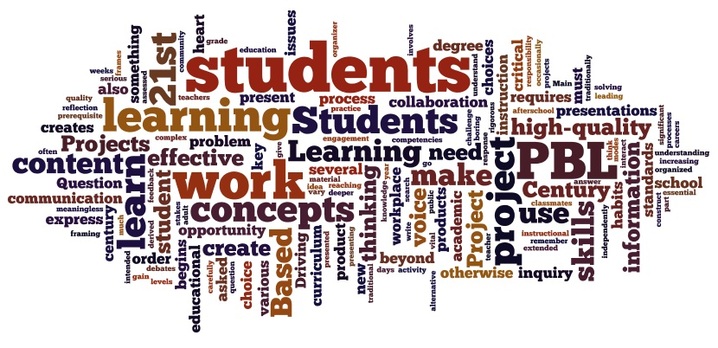
PBL, Project Based-Learning

So you might be thinking, is that all to the new story? No, let’s look at another learning method, PBL, project-based learning. This is one comprehensive approach that reflects content mastery and critical thinking. Students learn by ‘doing a project’ or ‘an experimentation’ and this demonstrates:


·    Student voice and Choice: Project work allows the students to make their own choices that interests them, thus they become active learners and decision makers in reflecting on the layout, execution and intent of the project.

·    Feedback and Revision: With importance of feedback and revision, students are able to critique their other peers and suggest improvements on specific areas where the project can grow even more successful. 

·    Problem-Solving: Students learn to process solutions for difficult problems. 

·    21st century skills: Students learn to work in a team while gaining communication among their classmates.

·    Inquiry and Innovation: Students make real inquiry that is not about researching for information and noting it down, rather inquiry enhances the students to question problems and to look for resources that lead to the discovery of their answers. They learn to draw on their own ideas and conclusions.

·    Driving Question: This is a question that captures the interest of the students and allows them to apply the content through critical thinking and reflection.
(http://tgccapstone.weebly.com/uploads/9/6/5/6/9656824/1076132.jpg?719)


Check out this interesting video on the concept of PBL:


(https://youtu.be/LMCZvGesRz8)


           PBL makes school engaging for students and it is student-centred. In my understanding, PBL is not just a ‘regular project’, not a project given to reward students for their learning but it is the learning and the process that are the reward (Larmer & Mergendoller, 2010). In a way, the method allows for the growth of a ‘new mindset’ instead of a ‘fixed mindset’ to foster while experiencing real-world prevalence to learning (Drake, Reid, & Kolohon, 2014). 

So to end this very first blog, I leave you with this quote: “Education is the most powerful weapon we can use to change the world”~ Nelson Mandela


So good luck in discovering your teaching journey…

(http://smrt.ccel.ca/files/2012/12/537638_410452115691165_583339006_n.jpeg)


References

Androne, M. (2014). Notes on john locke's views on education. Procedia - Social And 

      Behavioral Sciences, 137, 74-79. doi:10.1016/j.sbspro.2014.05.255.

Darder, A., Baitodano, M. P., & Torres, R. D. (Eds.). (2009). The critical pedagogy reader 

      (2nd ed.). New York, NY: Routledge.

Drake, S. M., Reid, J. L., & Kolohon, W. (2014). Interweaving curriculum and classroom 

      assessment: Engaging the 21st-century learner. Canada: Oxford University Press.

Larmer, J. & Mergendoller, J. R. (2010). Seven essentials for project-based learning. 

      Retrieved from http://www.ascd.org/publications/educational_leadership/sept10/vol68/
     
      num01/Seven_Essentials_for_Project-Based_Learning.aspx.